
Partnerships vs paid media is a budget question, not a debate. Here's how to move spend from ads into partners without a hole in next quarter's pipeline.
Partnerships vs Paid Media: The Argument Is Over. The Budget Isn't.
Most SaaS teams already believe partners beat ads.
Their budget says otherwise.
The LinkedIn line is still $15,000 a month.
The partner line is a Slack channel and a commission spreadsheet.
And nobody wants to be the person who cut ads and watched pipeline fall off a cliff in week six.
That fear is reasonable. Partnerships vs paid media isn't a debate any more; it's a transition problem. This post is the plan for moving money from ads into partners without leaving a hole in next quarter's pipeline.
If you still need convincing that partners win, start with our £1 on ads vs £1 on partners breakdown and why trust beats traffic. This one assumes you're convinced and asks: what do you move, when, and how do you prove it worked?
Why the money has to come from paid
There's no new budget coming.
Gartner's 2026 CMO Spend Survey put marketing budgets at 7.8% of company revenue, up from 7.7% the year before. Effectively flat. Gartner's Ewan McIntyre summed up the squeeze:
“CMOs are being asked to deliver growth, efficiency and transformation without meaningful budget expansion.
”
So a partner program gets funded by taking money from something else. Paid media is the obvious candidate because it's the biggest line, as the 2025 edition of the same survey found:
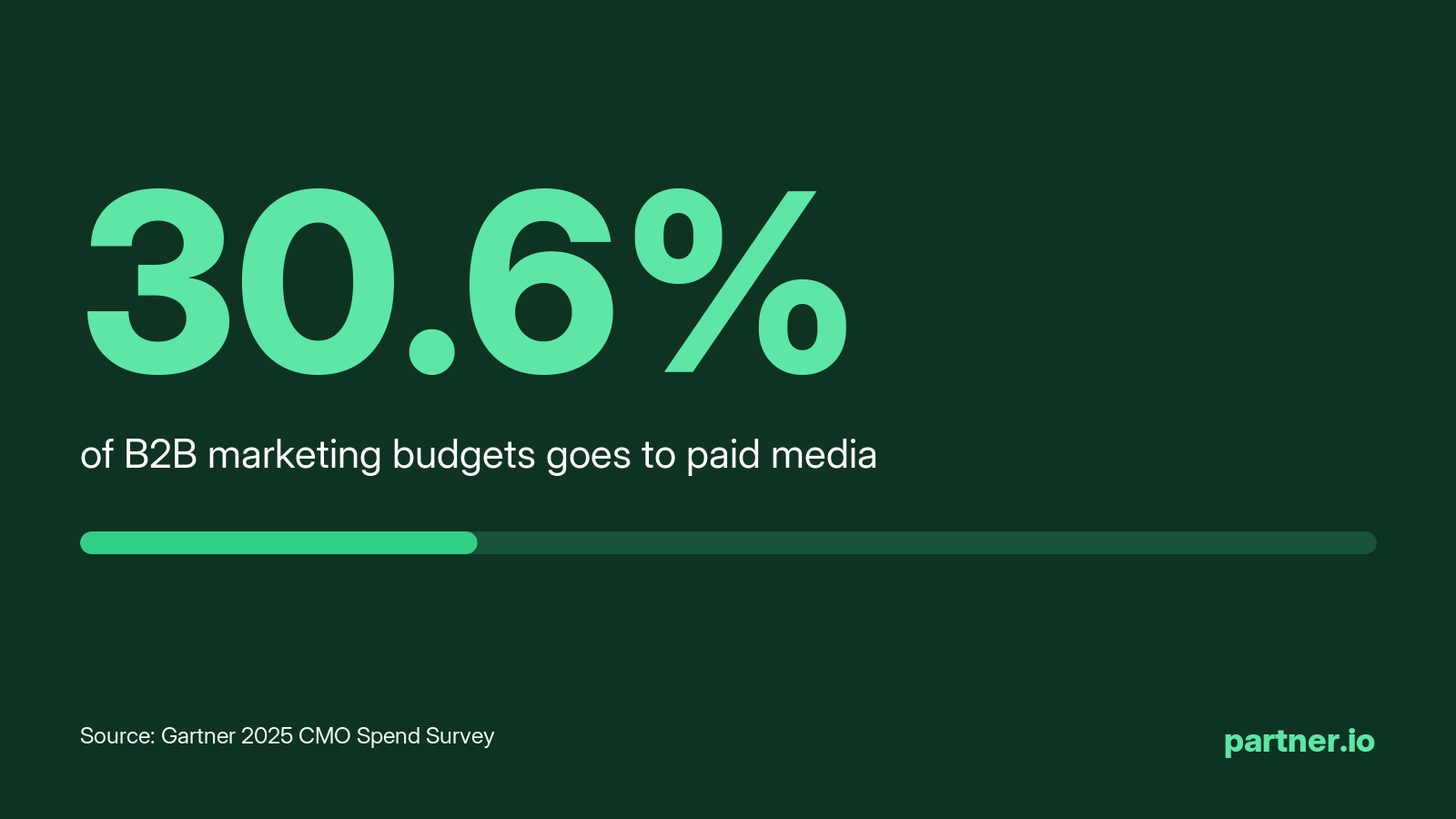
“Paid media continues to dominate marketing spend, accounting for 30.6% of marketing budgets or 2.4% of company revenue. However, media price inflation means CMOs are getting less for every dollar spent.
”
Both surveys lean towards companies with more than $1B in revenue. At a $10M ARR SaaS company, the pattern is usually sharper: paid is often the only marketing line big enough to move.
The case for keeping paid (and why it's weaker than it looks)
The strongest argument for paid media is control. You set a budget on Monday, leads arrive on Tuesday, and you can turn it off on Friday. Partners don't work like that. Recruiting, onboarding and getting a first deal out of an agency can take a quarter.
That's true. It's also only half the picture.
Paid's speed is speed to a lead, not to revenue. Dreamdata's 2026 LinkedIn Ads benchmarks, as reported by PPC Land, put the average B2B buying cycle at 272 days from first marketing touch to closed revenue, with 88 touchpoints along the way. The ad you pay for this week is competing for a deal that closes next summer.
And buyers are pulling away from the channels you pay for. In a Gartner survey of 632 B2B buyers, 61% said they prefer a rep-free buying experience, and 73% said they actively avoid suppliers who send irrelevant outreach. A referral from an agency they already pay doesn't count as outreach. It counts as advice.
So the honest trade-off looks like this:
| Paid media | Partnerships | |
|---|---|---|
| Time to first lead | Days | Weeks to months |
| Cost type | Fixed, paid up front | Mostly variable, paid on close |
| Stops when you stop paying | Yes | No, relationships keep producing |
| Buyer trust | Low | Borrowed from the partner |
| Control over volume | High | Medium |
You give up some control. You get a cost line that only bills you when revenue arrives. For most small teams, that's the better deal, as long as you don't flip the switch overnight.
What to cut first, and what to keep
Not all paid spend is equal. Some of it creates demand, some of it captures demand someone else created. Partners create demand. So keep the capture and cut the creation.
Cut first: cold prospecting audiences
Broad LinkedIn campaigns aimed at job titles who've never heard of you are the most expensive way to start a conversation. They're also the spend a good referral partner replaces most directly, because the partner starts the conversation with trust already in place. We've written about how B2B SaaS replaces cold prospecting with referrals if you want the mechanics.
Keep: branded search and retargeting
When an agency recommends you, the client googles your name. If a competitor is bidding on it, you lose a deal your partner sourced. Branded search and retargeting are cheap, and they catch the demand partners create. Keep them running through the whole transition.
Repurpose: co-marketing with partners
Some of the media budget should follow the partner, not leave the building. Fund a joint webinar with your best integration partner, sponsor an agency's client newsletter, or put spend behind a case study you wrote together. That money buys reach into an audience that already trusts someone you work with.
“Ads rent attention by the click. Partners lend you trust they spent years earning.
”
The SHIFT plan: moving budget in five steps
Here's the sequence we recommend. We call it the SHIFT plan, and each step has a check before you move to the next.
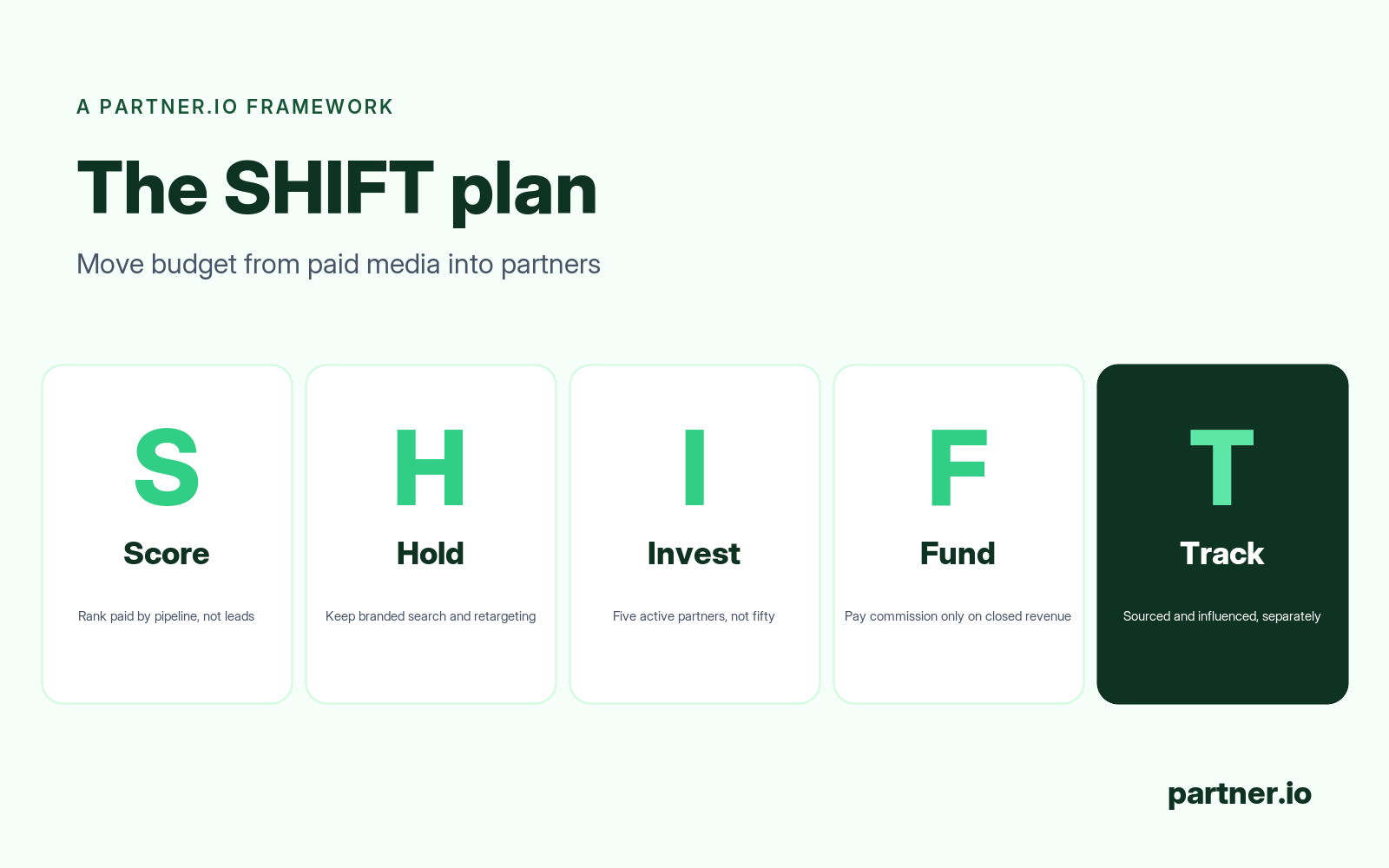
S: Score every paid channel by pipeline, not leads
Pull the last two quarters from your CRM. For each campaign, divide spend by opportunities created, then by closed-won revenue. Cost per lead flatters ads. Cost per opportunity tells you which ones you'd miss.
H: Hold the floor
Decide the minimum paid spend that keeps branded search, retargeting and your best-converting campaign alive. That's the floor. Nothing below it moves until partner pipeline is real.
I: Invest in five partners, not fifty
Pick five partners who already sell to your buyer: two agencies, a consultant, an integration partner and one happy customer with a big network. Five active partners beat fifty signed ones every time.
F: Fund partners per outcome
Move the money you cut from prospecting into a commission budget that only pays on closed revenue. If you were spending $5,000 a month on a campaign that produced one closed deal a quarter, that's $15,000 per customer. A 20% first-year commission on a $15,000 ACV deal is $3,000. Same customer, a fifth of the cost, and it's only paid when the deal closes.
T: Track sourced and influenced separately
A partner who brings you a new deal and a partner who helps you close an existing one are both valuable, but they're not the same number. Track both in your CRM from day one, or the finance conversation in month four will be a guessing game.
Want to run the SHIFT plan in a real partner portal? Try Partner.io free for 7 days, no credit card needed.
The 90-day overlap
The mistake that kills most budget shifts is cutting paid on day one. Partner pipeline lags. Plan for a quarter where both run.
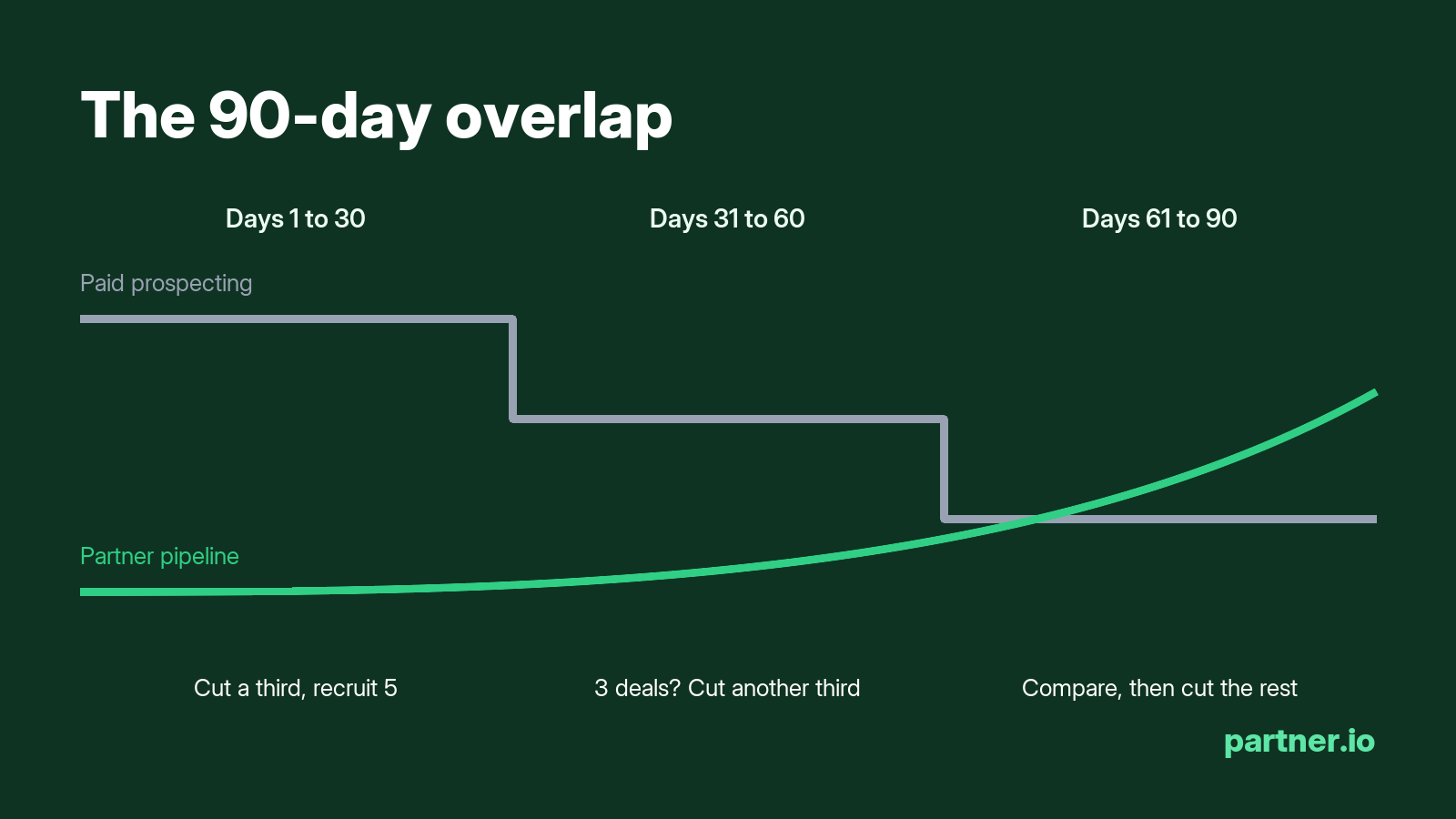
- Days 1 to 30: cut cold prospecting by a third. Recruit your five partners, agree terms, and get each one a portal login and a referral link.
- Days 31 to 60: cut another third if partners have registered at least three deals between them. Run one co-marketing activity with your strongest partner.
- Days 61 to 90: compare cost per opportunity for paid and partners. If partners are within range, cut the last third of prospecting and move it into commissions and co-marketing.
If partners haven't registered three deals by day 60, pause the cuts and fix the program before you blame the channel. Usually the problem is unclear terms or slow follow-up, not the partners.
If they have, keep going and recruit the next five.
What this looks like in the real world
Here's a composite of a pattern we see often.
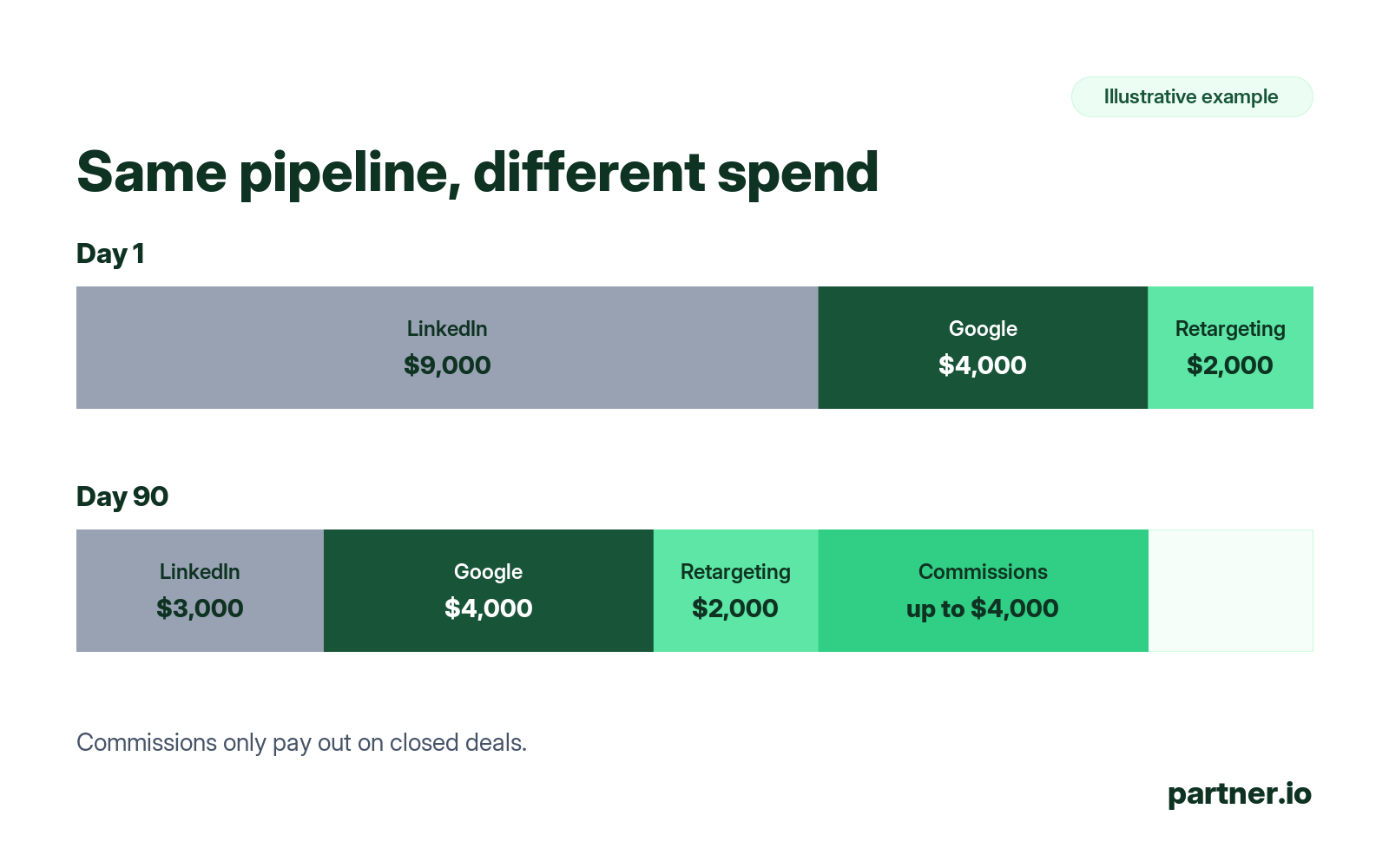
A 35-person SaaS company spends $15,000 a month on paid: $9,000 on LinkedIn prospecting, $4,000 on Google, $2,000 on retargeting. The LinkedIn campaigns produce plenty of leads and about four closed deals a quarter.
They keep Google and retargeting untouched. In month one they cut LinkedIn to $6,000 and sign three marketing agencies, one consultant and their biggest customer as referral partners.
By day 60, the agencies have registered five deals. Two of their clients searched the company's name before booking a call, and branded search caught both. By day 90, LinkedIn is down to $3,000, and $4,000 a month sits in a commission budget that's only been half spent, because commissions only pay on closed deals.
The pipeline didn't dip. The cost of each new customer did.
Making the case to finance
Finance doesn't care which channel you prefer. It cares about three numbers.
- cost per closed-won customer, by channel
- months to pay back that cost
- how much of next quarter's spend is committed before any revenue arrives
That last one is where partnerships win the argument. Ad spend is committed up front. Commission spend is committed after the deal closes. Show finance that 40% of your acquisition budget now only bills on revenue, and the conversation changes.
If you need help structuring what you pay partners, 10 partner tier structures covers the options, from flat referral fees to tiered revenue share.
When the budget shift goes wrong
Spreadsheets cause most of these failures. The hidden cost of managing partners in spreadsheets explains why.
Your checklist before you cut a single campaign
- Pull cost per opportunity and cost per closed deal for every paid campaign.
- Set your paid floor: branded search, retargeting, your best campaign.
- Shortlist five partners who already sell to your buyer.
- Agree commission terms in writing before the first referral.
- Set up deal registration so partner deals can't be lost to last-click attribution.
- Decide how you'll report sourced and influenced pipeline.
- Book a day-60 review with finance before you start.
Where Partner.io fits
Every step of the SHIFT plan needs somewhere to live that isn't a spreadsheet.
Recruiting the right five. Partner Discovery finds companies already selling to your customers, and Deal Surround shows which partner can open a specific target account.
Giving partners a reason to log in. The partner portal runs on your own domain, with referral links, deal status and their commission balance in one place. Co-marketing assets and newsletters live in the Engagement Hub.
Protecting attribution. Deal registration syncs with HubSpot, Pipedrive and Salesforce, so a partner's deal carries their name into the CRM instead of being credited to the last ad someone clicked.
Paying only on outcomes. Tiers, commissions and payouts turn the money you cut from ads into a variable cost that pays out through Stripe when deals close.
Customers as partners. Your happiest customers are the cheapest acquisition channel you have. User referrals give them a link and a reward without a partner agreement.
Stop renting pipeline
Paid media will always have a place. Branded search, retargeting, a campaign that reliably converts: keep them.
But the money you spend reaching strangers who've never heard of you is rent. Every month you stop paying, the pipeline stops. Partners are the opposite. The first quarter is slow, and then each partner keeps sending deals whether or not you bought a click that week.
Move a third of your prospecting budget this month. Sign five partners. Check back at day 60.
Try Partner.io free for 7 days → No credit card, no setup fee, cancel anytime.
Prefer a walkthrough first? Book a demo and we'll map the SHIFT plan to your budget.
- [partner-led-growth]
- [paid-media]
Published October 27, 2026