Strategy
The Hidden Cost of Managing Partners in Spreadsheets

The Hidden Cost of Managing Partners in Spreadsheets and CRM Fields
Most partner programs don’t fail dramatically.
They fade out quietly.
A few partners stop submitting leads. Sales stops trusting the attribution. Commissions become manual. Nobody knows which agencies are active, which integrations drive the pipeline, or why “strategic” partners haven’t sent a deal in four months.
Then someone opens a spreadsheet called:
Partner Tracking FINAL_v7_REAL.xlsx
That’s usually the moment things have already gone wrong.
The uncomfortable truth is this: spreadsheets and CRM fields were never built to run a partner ecosystem. They were built to patch over the absence of proper partner infrastructure.
And for a while, that patch works.
Until revenue depends on it.

Why Most Partner Programs Break at Scale
Early-stage partner motions are deceptively simple.
You recruit a few agencies.
A couple of consultants send referrals.
Maybe an integration partner brings inbound leads.
Sales manually tracks opportunities in HubSpot or Salesforce.
At five partners, it feels manageable.
At fifty, everything starts leaking.
Not because the team is bad.
Because the operating system underneath the program is fragile.
The cracks show up fast:
Partners asking where their commission is
Duplicate deal registrations
No visibility into sourced vs influenced revenue
Agencies are sending leads through email because the process is easier
Sales reps bypassing attribution to protect quota
Referral links breaking
No onboarding consistency
PDFs and docs scattered across Google Drive
CRM properties multiplying like weeds
This is the hidden tax of spreadsheet-led partner management.
It doesn’t appear on a finance report.
It appears to have lost momentum.
CRM Fields Are Not a Partner Strategy
CRMs are brilliant at managing direct sales pipelines.
They are terrible at managing partner relationships.
That distinction matters.
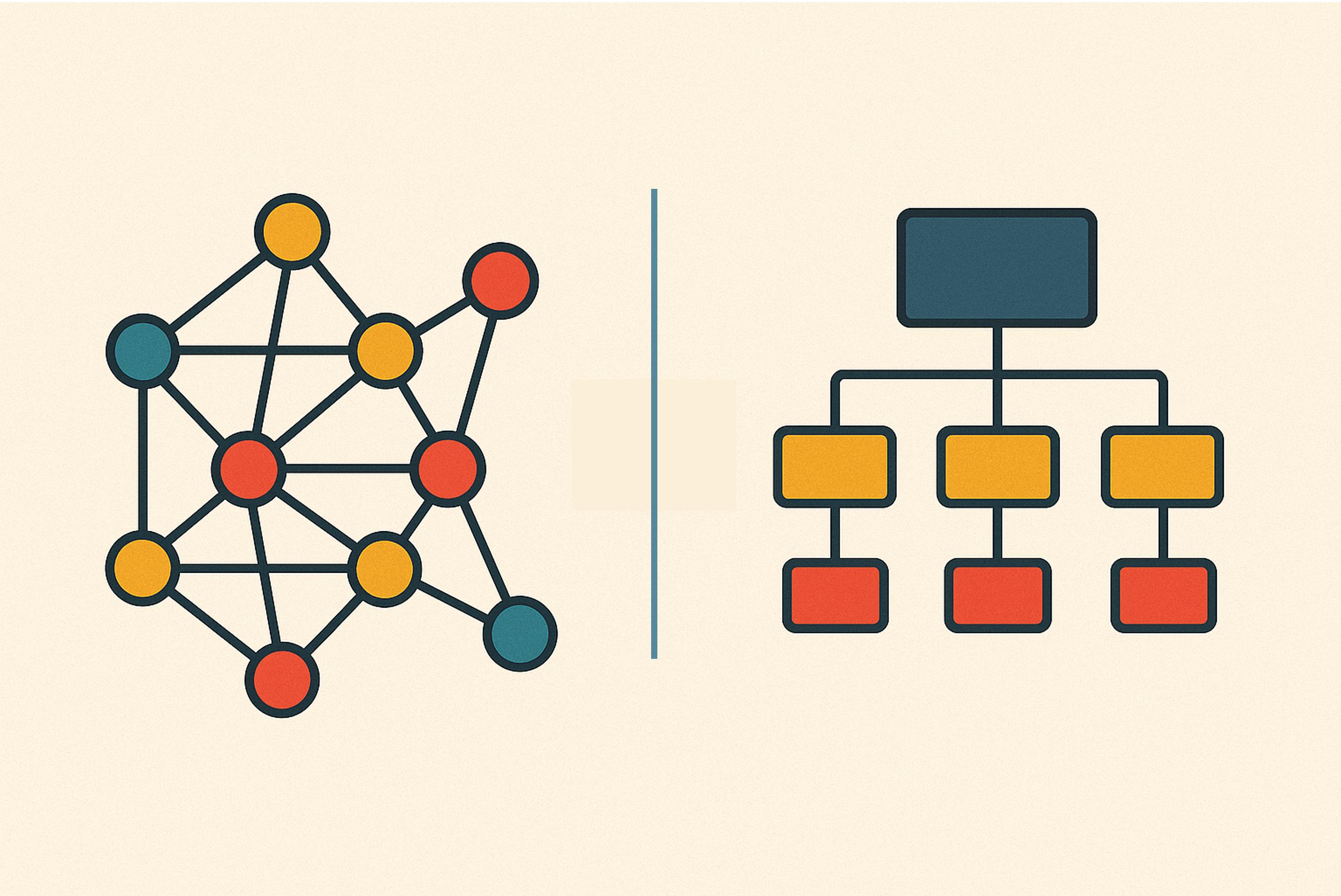
A CRM tracks opportunities. A partner program manages behaviour.
Those are different systems.
Partners need:
onboarding
enablement
incentives
visibility
communication
attribution
payout confidence
deal transparency
A CRM field called Partner Source = Yes solves none of that.
You can’t build a scalable co-sell motion on hidden properties and manual updates.
And yet thousands of SaaS companies try.
The Real Cost Isn’t Admin. It’s Partner Trust.
Most teams think spreadsheets create an operational problem.
The bigger problem is psychological.
Partners stop trusting the program.
That’s the killer.
When a referral disappears into a CRM black hole, the partner notices.
When commissions arrive late, the partner notices.
When there’s no visibility into deal progress, the partner notices.
The best partners always have options.
If your process creates friction, they’ll prioritise someone else.
Usually, the company makes it easier to work together.

The Four-Layer Partner Failure Pattern
After looking at hundreds of partner programs, there’s a predictable pattern behind most stalled ecosystems.
Not a lead problem.
Not a recruitment problem.
An infrastructure problem.
1. Recruitment Without Activation
The team signs partners for vanity metrics.
Twenty agencies onboarded.
Thirty affiliates recruited.
Ten technology integrations announced.
None activated.
No onboarding sequence.
No training.
No first-win process.
No visibility into what “good” looks like.
The result:
A large inactive partner list that looks healthy in board slides and is dead everywhere else.
2. Attribution Without Accountability
Deals get submitted manually.
Sales reps update fields inconsistently.
Partners chase updates through Slack or email.
Nobody agrees on what counts as sourced revenue.
This creates internal tension fast.
Sales thinks partners are claiming too much.
Partners think sales are stealing deals.
Both sides end up right.
3. Incentives Without Clarity
Most commission structures are vague.
“Revenue share.”
“Referral bonus.”
“Tiered incentives.”
Fine in theory.
Chaos in practice.
What happens when:
A deal expands six months later?
Two partners touch the same account?
Does a reseller discount heavily?
Does the customer churn after 90 days?
If the rules live inside someone’s head or are buried in a spreadsheet, disputes become inevitable.
4. Enablement Without Visibility
Most partner content is invisible.
PDFs in folders.
Old decks in Drive.
Training docs nobody opens.
The team has no idea:
What partners actually use
Who completed onboarding
Which assets influence revenue
Where engagement drops off
That makes optimisation impossible.
What High-Performing Partner Teams Do Differently
The strongest partner-led companies treat partnerships like a product.
Not a side project.
They build systems around partner experience, attribution, and repeatability.
There are a few patterns that consistently show up.
They Reduce Friction Everywhere
The best partner programs obsess over ease.
Can a partner:
Register a lead in under 60 seconds?
See deal progress without chasing someone?
Access enablement instantly?
Understand payout rules immediately?
Generate tracking links without support tickets?
Every extra step kills participation.
Good partner teams know this.
That’s why modern PRM software exists in the first place.

They Separate Partner Operations From CRM Operations
This is where many SaaS teams get stuck.
They try forcing partnership workflows into systems designed for sales reps.
A proper partner motion needs:
partner portals
onboarding flows
deal registration
referral attribution
partner training
commission management
account mapping
resource sharing
engagement analytics
Your CRM should sync the data.
It should not be the partner experience.
They Build Around Activation, Not Recruitment
The strongest ecosystems usually have fewer active partners than people expect.
But those partners actually produce a pipeline.
That’s the difference.
One good agency partner generating £40k MRR matters more than 200 “signed up” affiliates doing nothing.
Smart teams optimise for:
First referral speed
Onboarding completion
Partner engagement frequency
Influenced revenue
Repeat submissions
Not vanity counts.
What This Looks Like in the Real World
A SaaS company running a referral and agency motion hit a wall around 70 partners.
Everything lived in HubSpot.
Deal tracking happened through custom properties.
Partner commissions were calculated each month manually.
Training docs sat in Notion.
Referral links were generated on an ad hoc basis by the ops team.
The symptoms looked familiar:
duplicate leads
partners chasing updates weekly
sales disputing attribution
inactive agencies
delayed payouts
zero visibility into partner engagement
The turning point wasn’t adding more partners.
It was fixing the operating system.
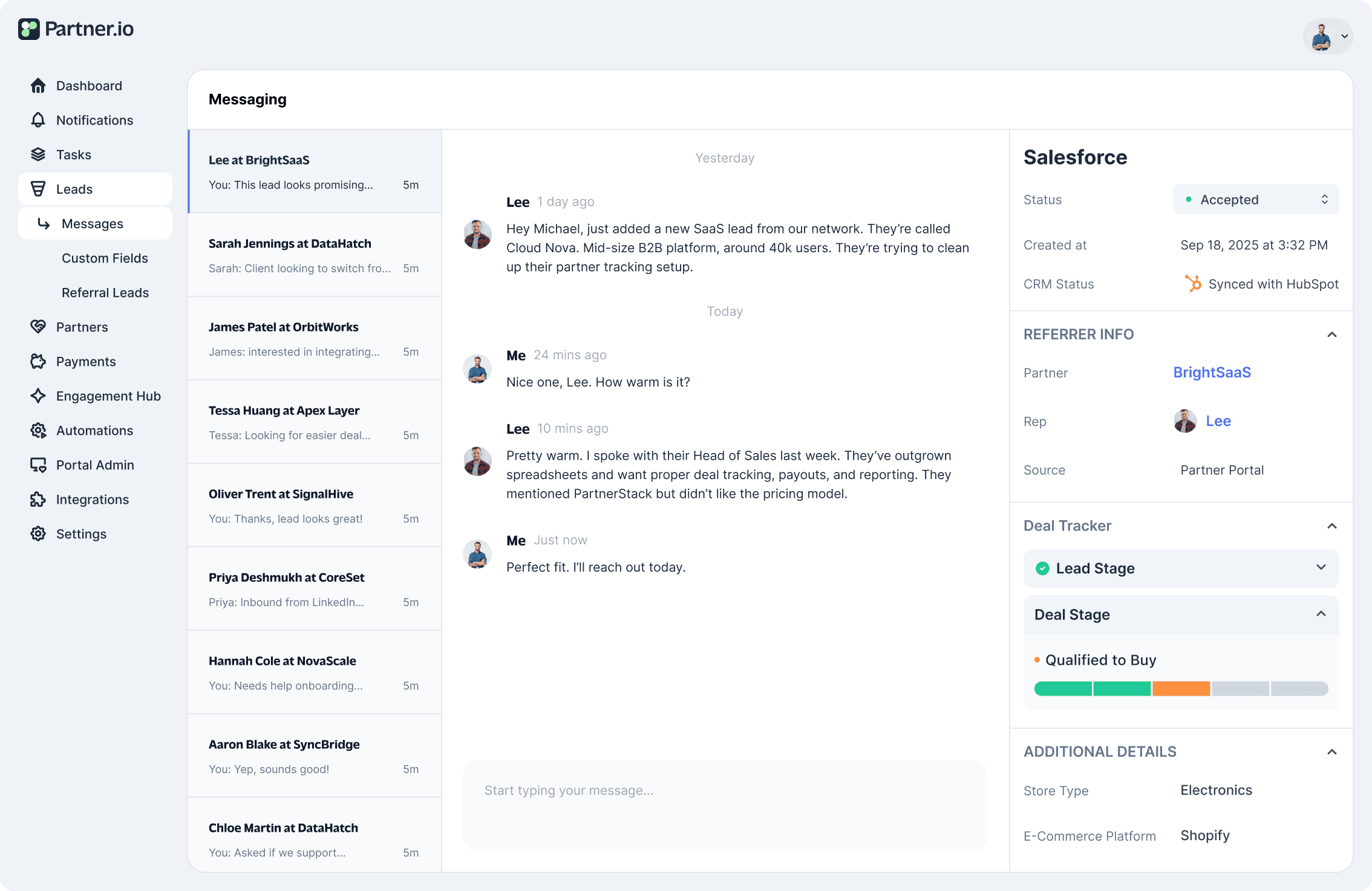
They moved onboarding, deal registration, partner resources, and attribution into a dedicated PRM setup.
Within a few months:
Referral submissions increased
Partner response times dropped
Inactive partners became obvious
sales friction has reduced dramatically
Commission disputes nearly disappeared
Nothing magical happened.
The process just stopped fighting the people using it.
The Shift From “Tracking Partners” to Running a Partner Ecosystem
This is the mental shift most companies eventually hit.
Spreadsheets track information.
PRMs manage ecosystems.
Those are not the same thing.
A modern partner-led growth motion needs:
structured onboarding
partner visibility
automated attribution
scalable incentives
partner communication
shared pipeline visibility
performance analytics
Trying to duct tape that together with CRM fields eventually creates operational debt you can’t ignore.
Especially once revenue depends on partners consistently producing a pipeline.
Where Partner.io Fits
This is exactly why platforms like Partner.io exist.
Not to replace your CRM.
To operationalise the layer your CRM was never designed to handle.
Instead of scattered spreadsheets and disconnected workflows, teams can manage:
referrals
co-sell motions
reseller programs
affiliate tracking
partner onboarding
commission structures
enablement
account mapping
partner engagement
All in one place.
Partners get visibility.
Sales gets cleaner attribution.
Operations get consistency.
Leadership gets actual revenue insight.
Most importantly, the partner experience improves.
That’s the bit many companies underestimate.

A Simple Test
Ask yourself five questions:
Can partners see the status of their deals without emailing someone?
Can you instantly identify your top-performing partners?
Do partners understand exactly how and when they get paid?
Can new partners onboard without manual hand-holding?
Would your partner program still function properly if your ops person were to disappear for two weeks?
If the answer to most of those is “not really”, the issue probably isn’t partner recruitment.
It’s infrastructure.
And infrastructure problems compound quietly until they become revenue problems.
The Teams Winning with Partnerships Aren’t Winging It
The old model was:
“Throw some referral links together and track it in the CRM.”
That’s gone.
Partner ecosystems have matured.
Agencies expect visibility.
Resellers expect structure.
Technology partners expect coordination.
Affiliates expect automation.
The companies growing through partnerships today are treating partner operations with the same seriousness they treat sales operations.
Because once partnerships become a meaningful revenue channel, spreadsheets stop being “good enough.”
They become the bottleneck.
And usually an expensive one.
Ready to Stop Running Partnerships Through Spreadsheets?
If your partner program still depends on CRM workarounds, scattered docs, and manual commission tracking, you’re already feeling the drag.
Partners disengage.
Sales loses trust in attribution.
Operations turns into admin.
Partner-led growth only works when the system behind it works.
Partner.io gives you the infrastructure to run referrals, co-sell, reseller, and affiliate programs properly, without duct-taping everything together in spreadsheets and custom CRM fields.
Book a demo and see how modern partner teams are:
onboarding partners faster
tracking revenue cleanly
reducing attribution disputes
automating commissions
turning partner activity into an actual pipeline
Because partnerships should generate revenue, not operational headaches.
https://www.partner.io/book-demo