Strategy
Strangers Are Partners You Just Haven’t Met Yet

Most companies don’t have a pipeline problem.
They have a visibility problem.
The deals are out there. Conversations are already happening. Recommendations are being made without you in the room.
You just aren’t connected to them.
That stranger who mentioned your product in a Slack group. The agency quietly recommending alternatives. The integration partner solving the same customer problem from a different angle.
They are already part of your market.
You just haven’t built a way to work with them.
That’s the gap.

Why partner-led growth actually works
Partnerships scale because they sit upstream of demand.
Before a buyer fills out a form, they ask someone they trust.
Before they shortlist vendors, they look for validation.
That’s where partners live.
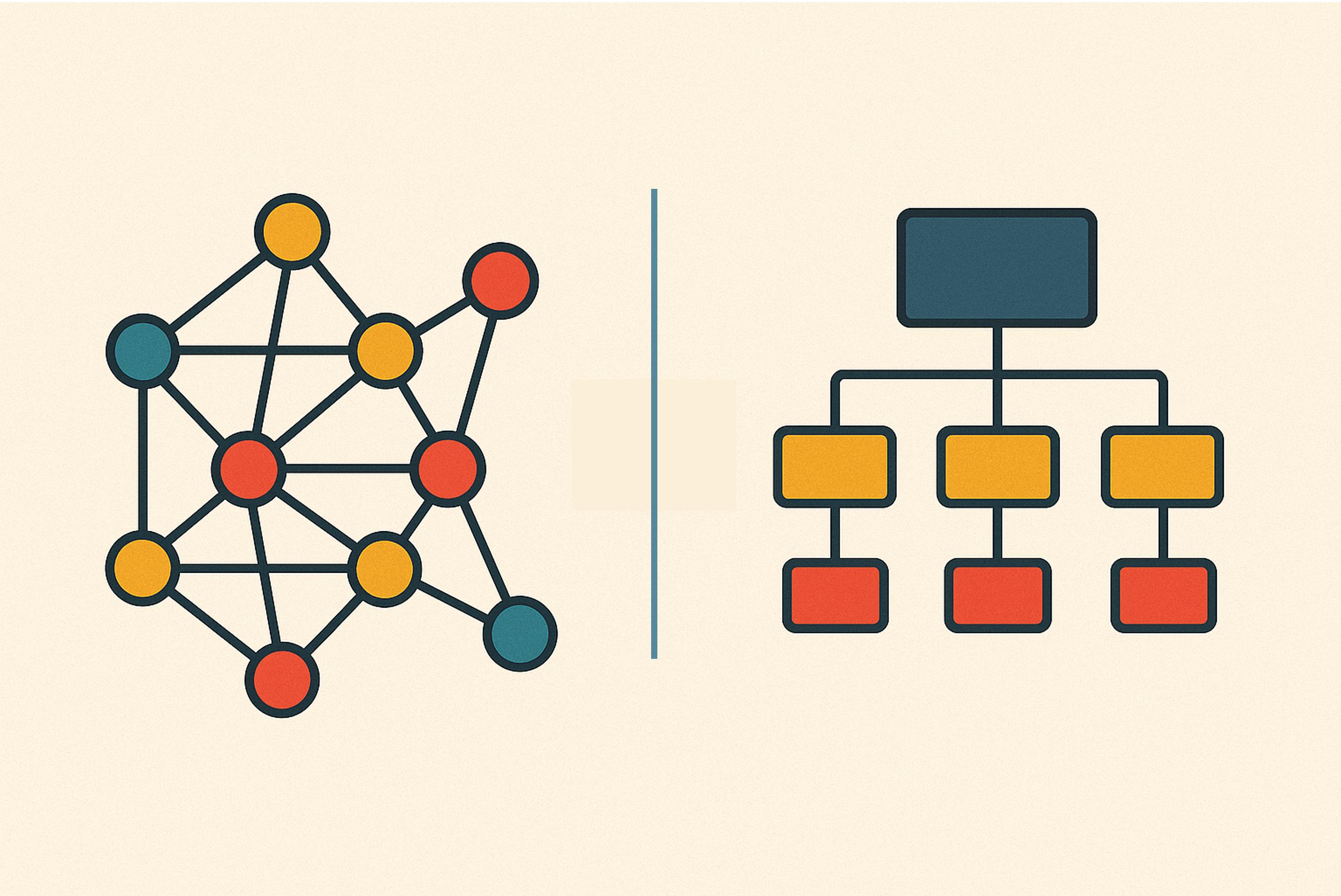
The best teams don’t treat partnerships as a side channel. They treat them as a system that compounds:
Referrals bring in warm deals with context
Agencies influence buying decisions early
Integration partners unlock new use cases
Resellers carry your product into markets you can’t reach directly
But none of this works without structure.
Good intentions don’t create pipeline. Systems do.
The 5 patterns behind high-performing partner programs
After working with teams building real partner revenue, the same patterns show up again and again.
1. They remove friction to zero
If a partner has to think, they won’t act.
Top programs make it painfully easy to:
Submit a lead
Track deal progress
Understand what they’ll earn
Get paid
If it takes more than a couple of minutes, you’ve already lost them.
2. They tie rewards to real revenue
Closed Won is not Paid.
Strong programs pay on collected revenue, not CRM stages.
This avoids disputes, aligns incentives, and keeps finance onside.
Simple rule: if cash hasn’t landed, commission hasn’t either.
3. They give partners visibility, not just access
Most programs fail here.
Partners don’t need your CRM. They need:
Deal status updates
Commission tracking
Performance insights
When partners can see progress, they stay engaged. When they can’t, they drift.
4. They treat enablement like a product
Sending a PDF isn’t enablement.
High-performing teams build structured learning:
Short courses
Certifications
Clear positioning
Partners who understand your product sell it better. It’s that simple.
5. They operationalise relationships
This is where most programs break.
Everything lives in email, Slack, or spreadsheets.
Nothing connects.
Strong teams centralise:
Partner onboarding
Agreements
Content
Communication
Not for control. For consistency.

A simple framework: TURN
If you want to turn strangers into partners, you need a repeatable motion.
Use this:
T: Target the right partners
Not everyone is a fit.
Focus on:
Existing overlap with your ICP
Natural adjacency to your product
Proven distribution channels
U: Unlock quick wins
Don’t start with strategy decks.
Start with:
A referral
A co-sell opportunity
A shared customer
Give partners a reason to care early.
R: Reinforce with structure
Once momentum starts, add:
Clear incentives
Defined processes
Visibility into outcomes
This is where a PRM becomes essential.
N: Nurture the relationship
Partnerships aren’t set and forget.
Keep them active through:
Regular updates
New opportunities
Recognition and rewards
No nurture, no growth.

What this looks like in the real world
A partner manager at a mid-sized SaaS company spots overlap with an agency working with their ideal customers.
Instead of a long partnership proposal, they start small.
They invite the agency into a shared deal.
The agency introduces two prospects.
Both deals progress quickly because trust is already there.
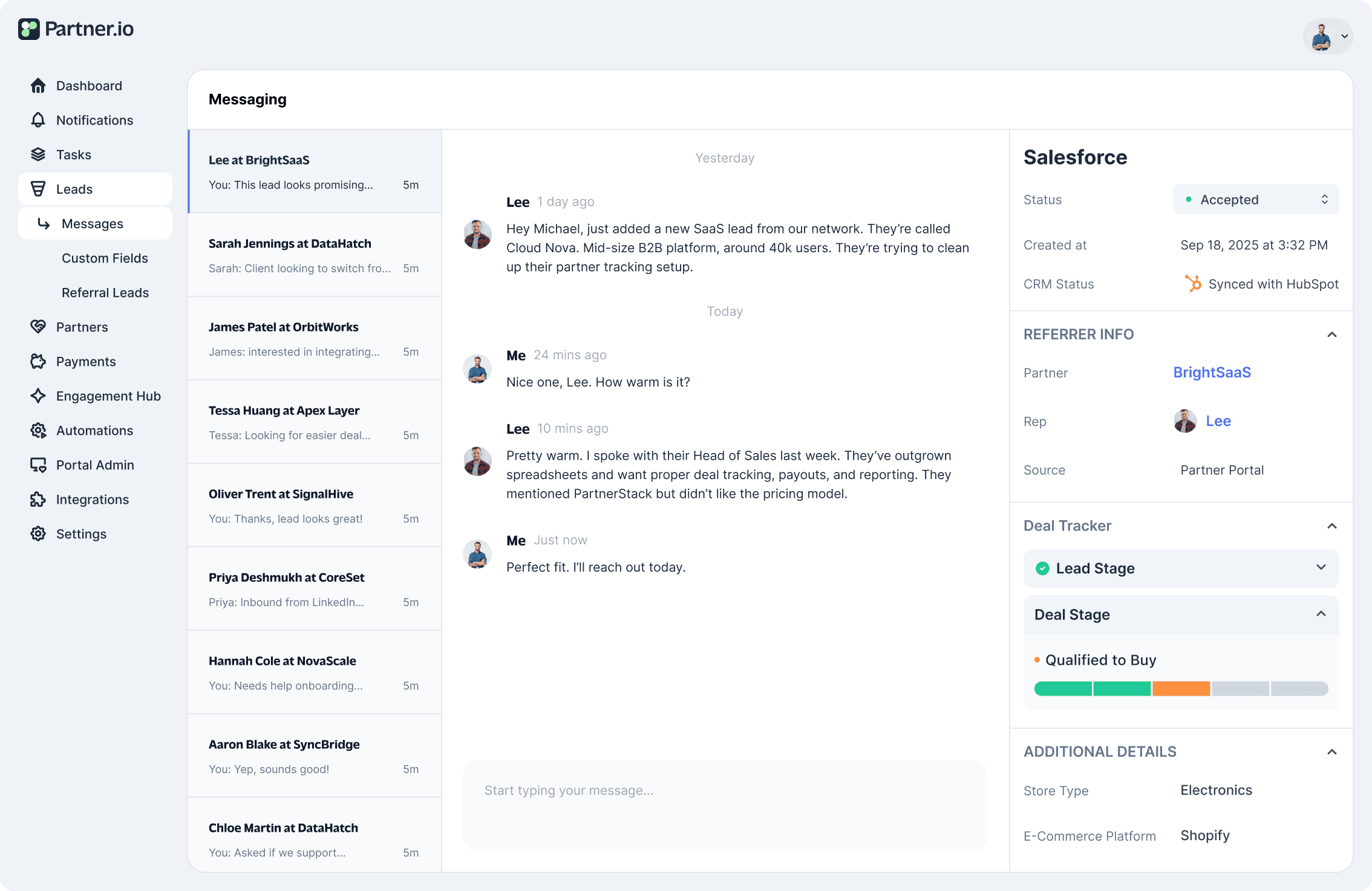
The partner logs both deals in a portal. They can see status updates without chasing.
They complete a short training module to sharpen their pitch.
They earn commission once the deals are paid.
Three months later, that agency is their top referral source.
Not because of a grand strategy.
Because the system made it easy to act.

Where most teams get stuck
You don’t need more partners. You need better execution.
Here’s where things usually break:
Leads get submitted but disappear into CRM black holes
Partners don’t know what’s happening with their deals
Commission calculations become manual and messy
Enablement lives in scattered docs no one reads
Internal teams don’t trust the partner channel
Fixing this manually doesn’t scale.
You end up hiring more people just to manage chaos.
Why a PRM changes the game
This is where PRM software like Partner.io comes in.
It’s not about adding another tool. It’s about creating a system that connects everything:
Partners submit and track deals in one place
Sales teams see partner influence clearly
Commissions are tied to real revenue
Training, content, and communication live in a single hub
Account mapping surfaces new opportunities automatically
Instead of chasing updates, partners stay engaged.
Instead of guessing impact, you can measure it.
That’s the difference between activity and actual partner-led growth.
If you’re serious about building this
Start simple:
Identify 5 partners already influencing your deals
Give them a clean way to submit and track opportunities
Align rewards to paid revenue
Build one clear enablement path
Track what actually converts
Then scale what works.
The truth is, your next best partner isn’t waiting for a partnership deck.
They’re already out there.
Already talking to your buyers.
Already shaping decisions.
Strangers are partners you just haven’t met yet.
The only question is whether you’ve built a system ready to work with them.
Book a demo and see how Partner.io turns strangers into partners and partners into revenue.
https://www.partner.io/book-demo