Strategy
Referral Marketing: How to Turn Loyal Customers into Your Best Acquisition Channel

Turn loyal customers into revenue-generating advocates with referral marketing
Most marketing teams chase attention. The smartest ones capture trust.
Referral marketing sits in the gap between the two. When someone recommends your product to a friend, the sales conversation starts halfway finished. Skepticism is lower. Intent is higher. Conversion is faster.
Yet most referral programs fail. Not because referrals do not work, but because the system around them is sloppy. Poor incentives. Awkward prompts. Broken attribution. Fraud leaking margin.
A real referral engine looks different. It runs like a funnel, not a widget.
A great customer moment
A referral prompt appears
The advocate shares a link or code
A friend lands on the offer page
The friend converts
The reward is validated
The advocate shares again
Do that well and referrals stop being a gimmick. They become a repeatable acquisition channel.
Referral marketing fundamentals
Referral marketing is structured word of mouth.
You create a reason to share. You make sharing effortless. You track the outcome. You reward the behaviour that produces revenue.
The economics are simple. Referred customers must convert better than cold traffic. The cost of rewards, platform fees, and fraud must stay below your normal acquisition cost.
Two decisions shape the program.
The first is reward structure. Single-sided rewards only benefit the advocate. Double-sided rewards benefit both the advocate and the friend. Double-sided programs usually win because the recipient has a reason to act.
The second decision is placement. Some companies embed referrals across the entire customer journey. Others run short bursts around launches or promotions.
Both approaches work. What does not work is bolting a referral button onto a thank-you page and hoping for magic.
Treat referrals like a conversion funnel. Increase the share rate. Increase the referred conversion rate. Protect the margin.

Why people actually refer
Customers do not refer because you asked. They refer because sharing feels safe.
Every referral carries social risk. The sender wonders whether the message will feel helpful or annoying. That tension decides whether the link gets sent.
Trust transfer drives the entire mechanism. A recommendation from a friend bypasses the skepticism that kills most marketing messages. The recipient assumes the product has already been vetted.
But the system collapses the moment it feels forced.
Pre-written referral messages often perform worse than editable ones. People do not want to sound like a marketing department. They want to sound like themselves.
Reward fit matters too. The incentive has to feel natural for the product. Practical products pair well with practical rewards. Lifestyle products can support experiential rewards. When the incentive feels wrong, the referral feels transactional.
The best referral message sounds like this:
I thought you might find this useful. If you try it, we both get a small perk.
Anything louder starts to feel like spam.

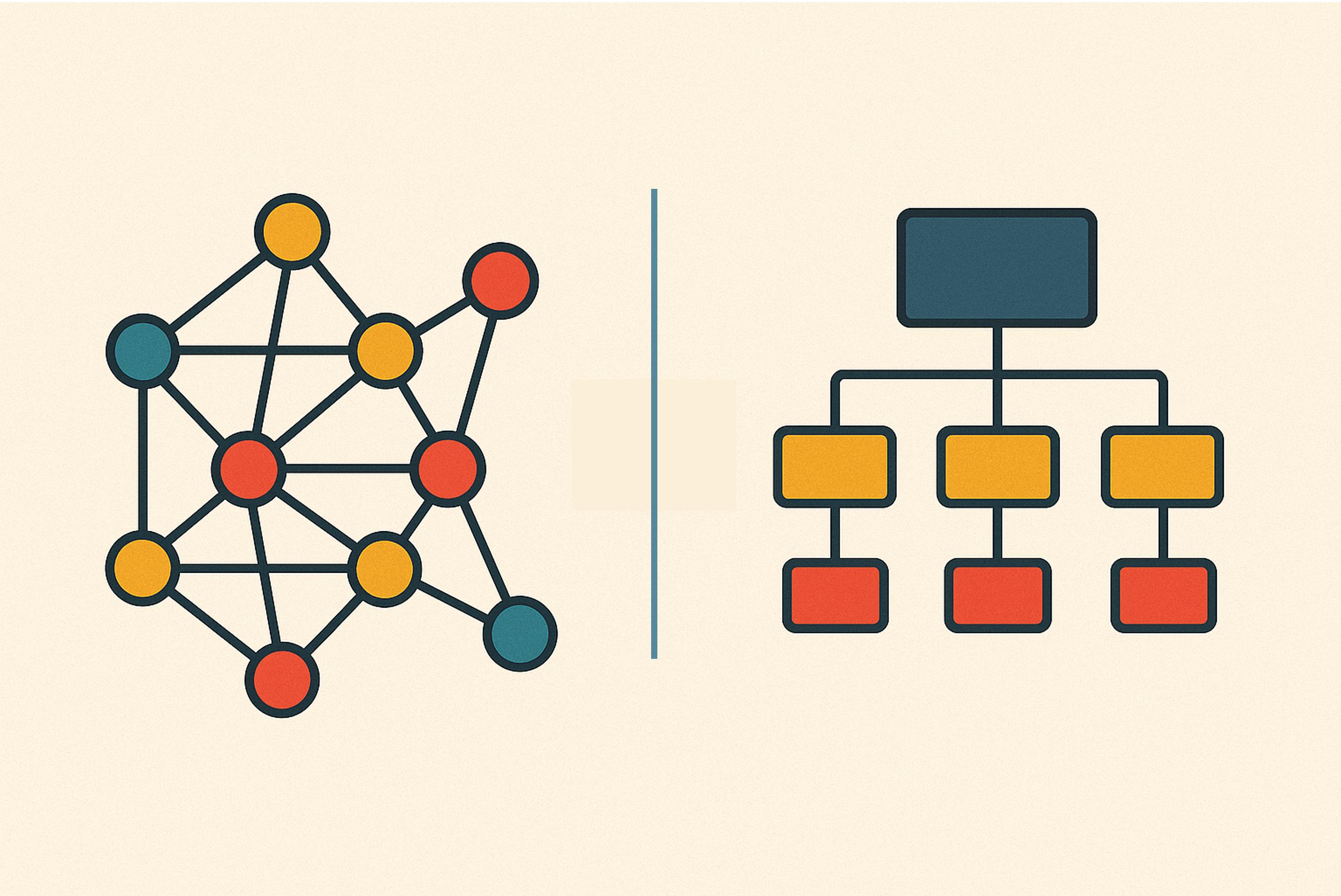
Referral, ambassador, and affiliate models
These models look similar. They solve different problems.
Referral programs
Referral programs rely on customers recommending the product to people they know. The mechanics are simple. Share a link. A friend converts. Rewards are issued after validation.
The strength here is trust. Referrals scale slowly but produce high-quality customers.
Ambassador programs
Ambassadors are advocates who represent the brand publicly. They create content, host events, or participate in community activity.
The return is influence and visibility, not just immediate conversions. These programs need relationship management, clear guidelines, and community support.
Affiliate programs
Affiliates are performance partners. They promote the product to their audience and earn commission on measurable outcomes.
This model scales quickly. It also attracts fraud, coupon leakage, and compliance issues if controls are weak.
A useful shortcut:
Referrals reach people I know.
Affiliates reach people I can access.
Ambassadors influence people repeatedly.
Many companies run two of these models at once.
Incentive design and reward economics
Incentives are both a growth lever and a cost centre.
Choose the wrong one, and the program either stalls or destroys the margin.
Discounts
Discounts work well when customers already understand the value. They reduce friction at checkout and are easy to communicate.
Percentage discounts often outperform fixed amounts for higher order values.
Cash rewards
Cash works when the product itself is financially framed. Fintech, telecom, and subscription businesses often use it successfully.
The downside is higher fraud risk and more operational complexity.
Store credit
Store credit keeps the reward inside your ecosystem. Customers perceive real value while you maintain stronger margins.
Many e-commerce brands start here.
Tiered rewards
Tiering pushes power advocates to share more. One referral unlocks a small reward. Five unlock something bigger. Ten unlocks VIP benefits.
The structure works if you enforce caps and validation rules.
Non-monetary rewards
Experiences, early access, exclusive products, and recognition can outperform cash for premium brands or strong communities.
A simple starting model works across many industries.
Give the friend the stronger reward.
Give the advocate something meaningful but smaller.
Validate before issuing rewards.
That structure maximizes conversion while controlling cost.
Referral UX that actually works
Referral UX has three jobs.
Create awareness.
Make sharing instant.
Make the offer credible to the friend.
The best prompts appear when the customer is happiest. After purchase. After onboarding. After solving a problem with support.
That emotional peak is when people naturally want to recommend the product.
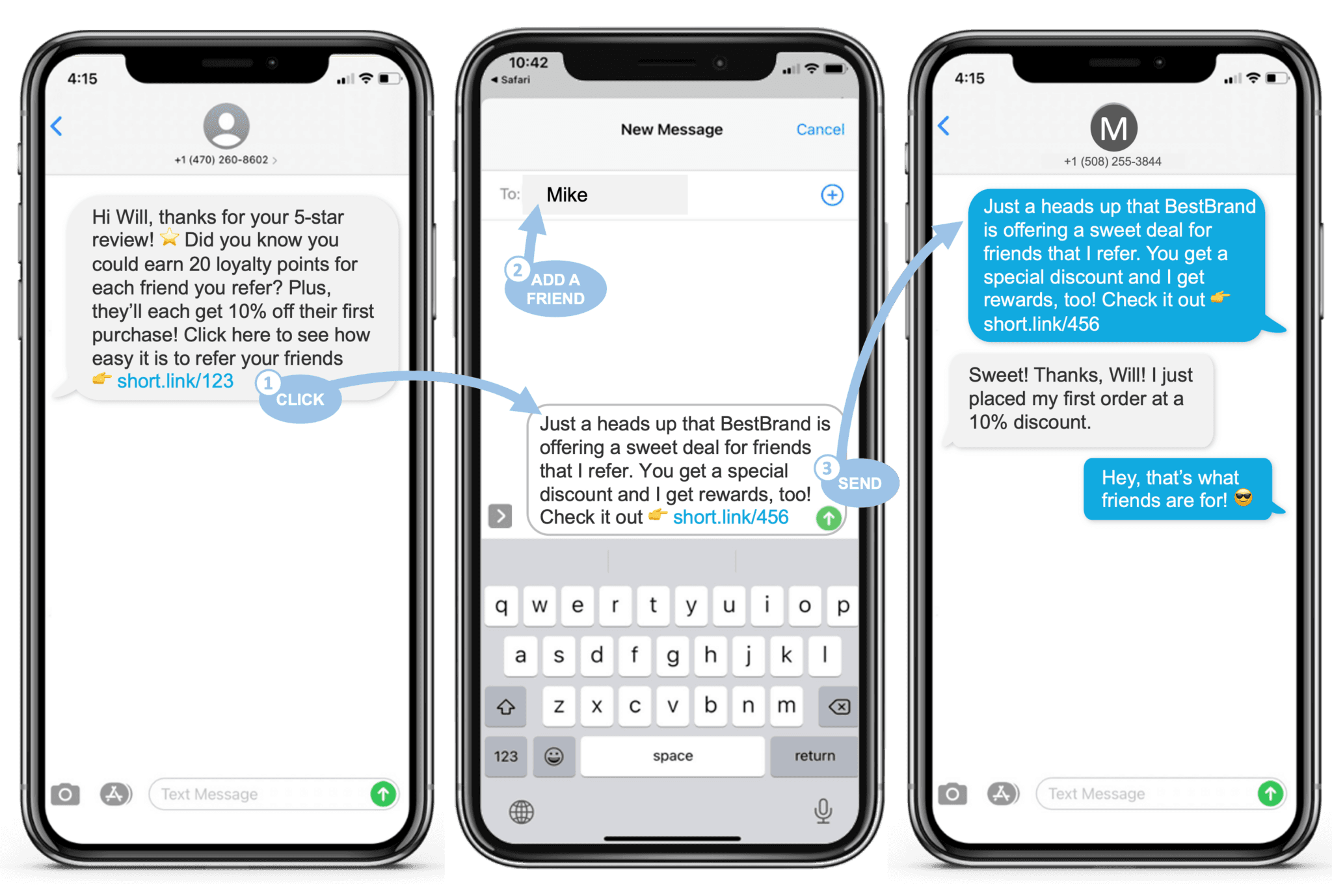
The sharing process must feel frictionless. Copy the link. Send a message. Done.
Avoid aggressive referral scripts. Editable templates work better. They reduce social pressure and allow the advocate to speak naturally.
Clarity around rewards matters just as much.
Tell the user exactly when the reward arrives. After the first purchase ships. After the subscription becomes paid. After the return window closes.
The rule is simple.
Sharing should be easy.
Reward validation should be strict.
Referral templates
Advocate email
Subject: Give a friend [friend reward] and get [advocate reward]
Hey [First name],
If you know someone who would like [product or category], this might help.
Your friend gets [friend reward].
You get [advocate reward] after their first order.
Your link:
[Referral link]
Quick message you can send:
"Hey, I’ve been using [Brand] for [benefit]. This link gives you [friend reward] if you want to try it."
Thanks for spreading the word,
[Brand]
Friend landing page
Headline: You’ve been invited. Enjoy [friend reward] on your first order.
Subhead: [Referrer name] thought you might like [Brand].
Claim your reward below.
[CTA: Claim my reward]
Why people choose [Brand]:
Benefit one
Benefit two
Benefit three
New customers only. Terms apply.
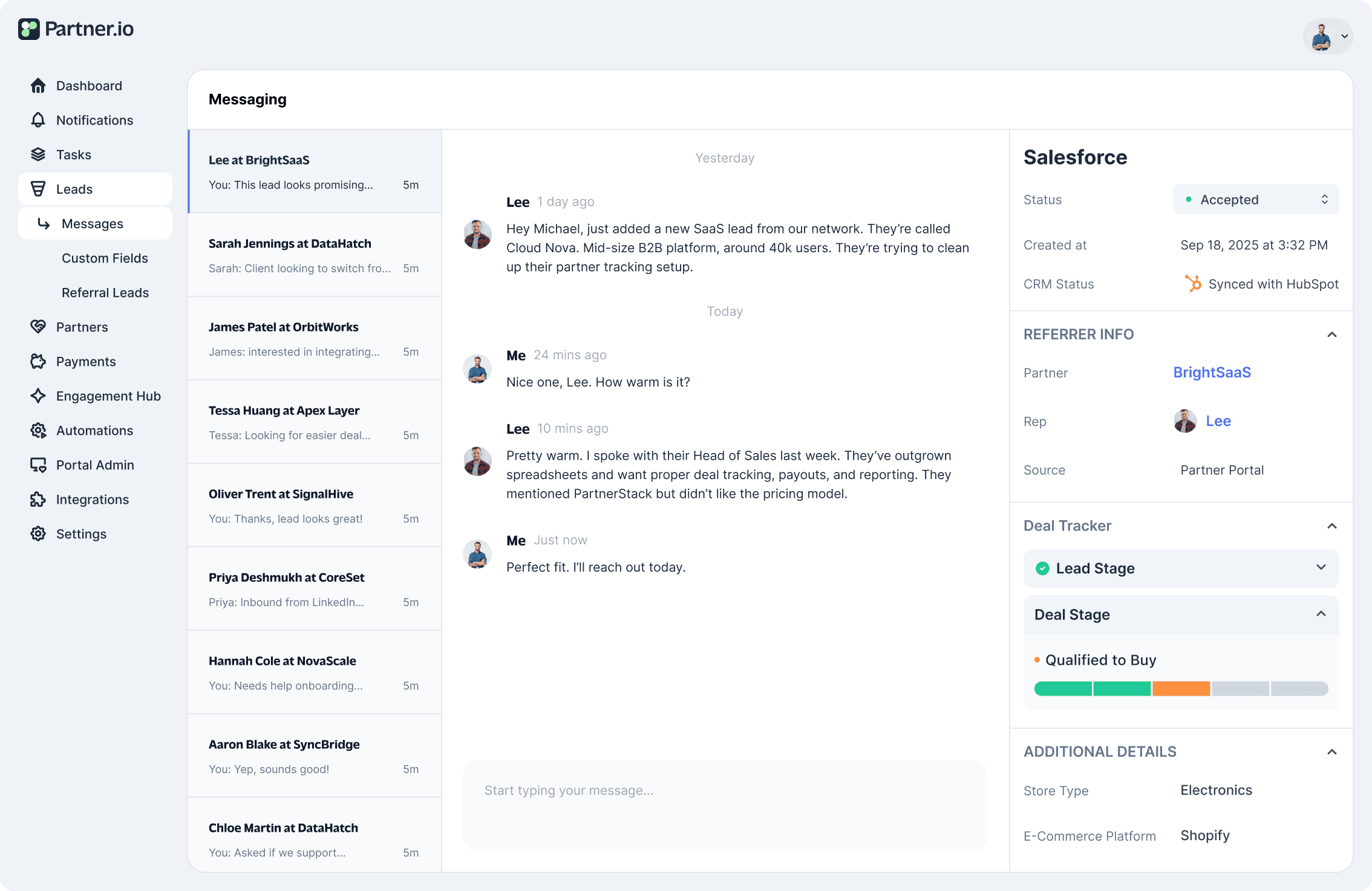
Tracking and attribution
This is where most referral programs break.
Without attribution the channel becomes guesswork. Rewards get issued blindly. Finance loses confidence.
The tracking stack should answer four questions.
Who referred the customer
Where the referral came from
Which incentive was used
How much revenue it produced
Referral links should carry consistent tracking parameters so analytics tools can categorize the traffic properly.
Promo codes act as a fallback when cookies fail. They are especially useful across devices and app journeys.
If checkout happens on another domain, configure cross-domain tracking so attribution does not break.
Validation matters just as much as tracking. Only issue rewards after confirming the referral is legitimate. Check for duplicate accounts, identical devices, or suspicious patterns.
Sharing should be frictionless. Rewards should require proof.
KPIs that matter
Track the referral funnel like any acquisition channel.
Top-line metrics:
Referral-driven revenue
Referral-driven customers
Referral CPA versus paid CPA
Reward cost as a percentage of revenue
Invalid or fraudulent reward rate
Funnel metrics:
Prompt impressions
Shares
Clicks
Conversions
Validated rewards
Quality metrics:
Lifetime value of referred customers
Retention versus other acquisition channels
Average order value and repeat purchase rate
Optimization metrics:
Placement performance
Incentive tests
Message variations
If referrals outperform paid acquisition on CPA and retention, the channel deserves serious attention.
Platform options
Several platforms power referral and partner programs.
ReferralCandy focuses on fast e-commerce setup and automated rewards.
Friendbuy emphasizes experimentation and optimization for high-growth brands.
Talkable provides a flexible enterprise referral infrastructure.
Extole focuses on large customer-led growth programs with deep orchestration.
Mention Me specializes in referral engineering and analytics for retail and e-commerce.
Yotpo combines loyalty programs with referral functionality.
Impact handles affiliate and partner tracking at scale.
Rewardful provides a lightweight affiliate infrastructure for SaaS companies.
The right platform depends on your business model. E-commerce brands need checkout integration and coupon logic. SaaS companies care more about billing triggers and account-level attribution.
Legal and privacy considerations
Referral programs introduce legal obligations quickly.
If advocates receive compensation for endorsements, disclosure requirements apply.
Commercial emails must follow the rules for truthful subject lines, opt-outs, and sender identification.
The safest referral design avoids collecting friends’ contact details directly. Let customers share the link themselves.
That approach avoids consent issues and reduces compliance risk.
Common referral mistakes
Pushy prompts kill participation. People will not send messages that make them look like marketers.
Weak fraud controls leak money. Self-referrals, fake accounts, and coupon scraping appear quickly once rewards exist.
Broken attribution makes the channel impossible to measure.
And the most common mistake is stagnation. Companies launch a referral program and never touch it again.
The best programs run constant experiments. Placement tests. Incentive tests. Message tests. Segmentation.
Small improvements compound.
What strong referral programs achieve
Well-run programs deliver measurable growth.
Retail brands generate millions in referral revenue once sharing friction drops and incentives improve.
Education and direct-to-consumer brands see referrals contribute meaningful percentages of monthly revenue.
Some e-commerce companies double referral conversion after redesigning incentives and placement.
SaaS companies have built affiliate and referral programs responsible for large portions of recurring revenue.
The pattern is consistent. Referral programs succeed when they are treated as infrastructure, not a campaign.
How to build one
Start with the value event that actually matters. Purchase. Activation. Paid subscription.
Design a simple double-sided offer that fits the economics.
Define strict validation rules before launch.
Place referral prompts at moments of customer satisfaction.
Build clean tracking with links and fallback codes.
Launch quietly to a small audience. Fix the gaps. Then expand.
Run structured experiments on incentives, messaging, and placement.
Review the numbers weekly.
Referrals are not magic. They are operational disciplines applied to trust.
Build the system properly, and your best customers start doing the work marketing struggles to replicate.